Overview

COST (European Cooperation in Science and Technology) is a funding organisation for research and innovation networks. Our Actions help connect research initiatives across Europe and beyond and enable researchers and innovators to grow their ideas in any science and technology field by sharing them with their peers. COST Actions are bottom-up networks with a duration of four years that boost research, innovation and careers.

This COST Action provides a computationally and experimentally sound foundation for the fundamental understanding and control of confined molecular systems. The resulting outcomes is translated into useful knowledge forming the basis for applications. These range from creating a new generation of materials including bio-materials, with immediate transfer to industry, to disclosing the chemistry occurring in space.

“COSY” is the acronym for “Confined Molecular Systems: from the new generation of materials to the stars”, a COST Action (acronym for European Cooperation in Science and Technology). It is basically a platform for cooperation between research groups in Europe that have nationally funded projects in confined molecular systems. The COST Action “COSY” aims to provide computational and experimental building blocks for a fundamental understanding of confined molecular systems in order to be able to control them. The platform already brings together more than 480 members from around 45 member countries of the European Union. It is structured in five strongly correlated working groups whose objectives range from a first-principles description of the interaction between a molecule and its environment, including the interstellar medium, to the synthesis of new materials with theranostics applications, energy conversion, and photocatalysis.

Action Contacts

María Pilar de Lara-Castells – Action Chair

Cristina Puzzarini – Action Vice Chair

Juan Carlos Hernández-Garrido – Scientific Grant Holder Representative

CA21101

CSIC Central Campus (Madrid), April 27-29 2026

We cordially invite all the members of the COST Action CA21101 (“COSY”), as well as all interested parties, to CSIC Central Campus, Madrid, for the Fourth and Final General Meeting of our COST Action. The COST Action is dedicated to a better understanding and recognition of issues relevant to the experimental and theoretical characterization of confined molecular systems, from those relevant in new materials research, to those playing a key role in astrochemistry. The Fourth General Meeting of the COST Action “COSY” will gather scientific sessions addressing the five Working Groups (WGs). A Management Committee Meeting will be celebrated during the afternoon of the last day (29 April). The General Meeting will provide an opportunity for the members of the Action’s five Working Groups (WGs) to undertake collaborations addressing the goals of the Fourth Grant Period of the COST Action. For this purpose, the meeting will host dedicated sessions covering all WGs. This Meeting will be central to promote the deliverables of the COST Action “COSY”. In this way, the program will include overview lectures (30 minutes long) by the leaders of the five Working Groups:

  • Working Group 1: Fundamental studies of molecular interactions: new methods, benchmarks on confined systems (Working Group 1 Leader: Piotr Zuchowski).
  • Working Group 2: Molecular motion in porous, biomolecular and environmental-confined systems via advanced simulation methods (Working Group 2 Leader: Sonja Grubisic).
  • Working Group 3: Advanced theory and experiments on confined metal/oxide clusters for catalytic and nanotechnology applications (Working Group 3 Leader: Alessandro Fortunelli).
  • Working Group 4: Time-resolved and reactive dynamics, spectroscopy, and simulations of molecules in He nanodroplets (Working Group 4 Leader: Marcel Mudrich).
  • Working Group 5: Computational, theoretical, and experimental investigation of the formation of molecules and matter in the interstellar medium and in planetary and solar atmospheres (Working Group 5 Leader: Lauri Halonen).
The program will also include invited lectures (25 minutes long), reporting active joint projects between the Action members, including those related to STSMs, and hot topic presentations (15 minutes long). We encourage the youngest researchers to present hot topic posters preceded by 2-minute flash presentations. Two RSC PCCP Poster prizes will be awarded. Three Prizes to the best Hot Topic contributions are sponsored by the journal Small Structures from the Editorial Wiley.


Event sponsors: Physical Chemistry Chemical Physics (PCCP) – Royal Society of Chemistry and Small Structures from the Editorial Wiley.

Local Organizing Committee

María Pilar de Lara-Castells (Action Chair, AbinitSim Unit, ABINITFOT Group, IFF-CSIC)

Katarzyna M. Krupka (AbinitSim Unit, ABINITFOT Group, IFF-CSIC)

Alberto García-Vela (ABINITFOT Group, IFF-CSIC)

Alexandre Zanchet (IFF-CSIC)

Manuel Mendoza Hurtado (University of Córdoba and University of Jaén)

Including support by: Leticia González, Elena de Lara-Castells, Víctor Castells, and Gabriel García de Lara

Management Committee

(Confirmed) Management Committee Members representing 22 Full COST Member Countries (in alphabetic order): Austria, Bosnia and Herzegovina, Bulgaria, Croatia, Czech Republic, Denmark, Estonia, Finland, France, Greece, Hungary, Italy, Latvia, Lithuania, Poland, Portugal, Serbia, Spain, Switzerland, Turkey, Ukraine, United Kingdom

Scientific Committee
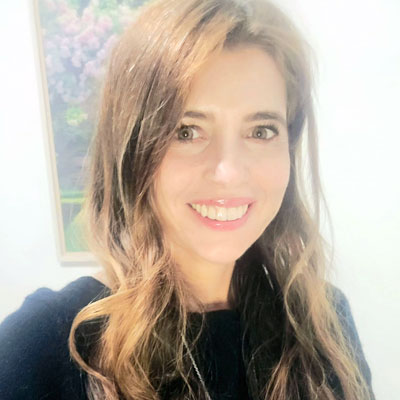
María Pilar de Lara-Castells

Action Chair
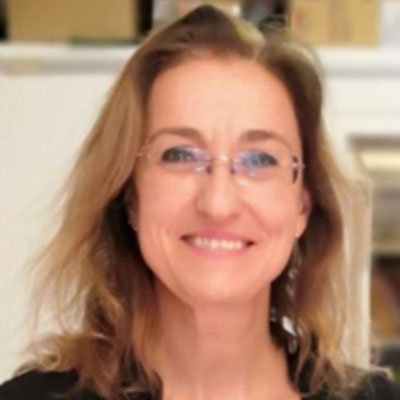
Cristina Puzzarini

Action Vice-Chair
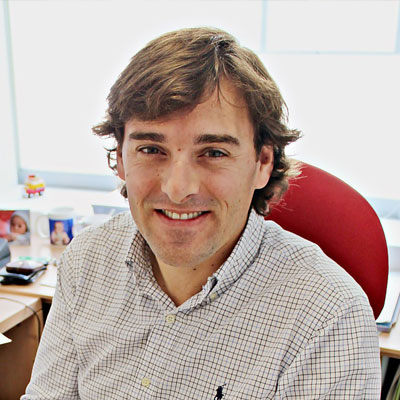
Juan Carlos Hernández-Garrido

Grant Holder Scientific Representative
Piotr Żuchowski

Working Group 1 Leader
Sonja Grubišić

Working Group 2 Leader
Alessandro Fortunelli

Working Group 3 Leader

Marcel Mudrich

Working Group 4 Leader

Lauri Halonen

Working Group 5 Leader
Working Groups

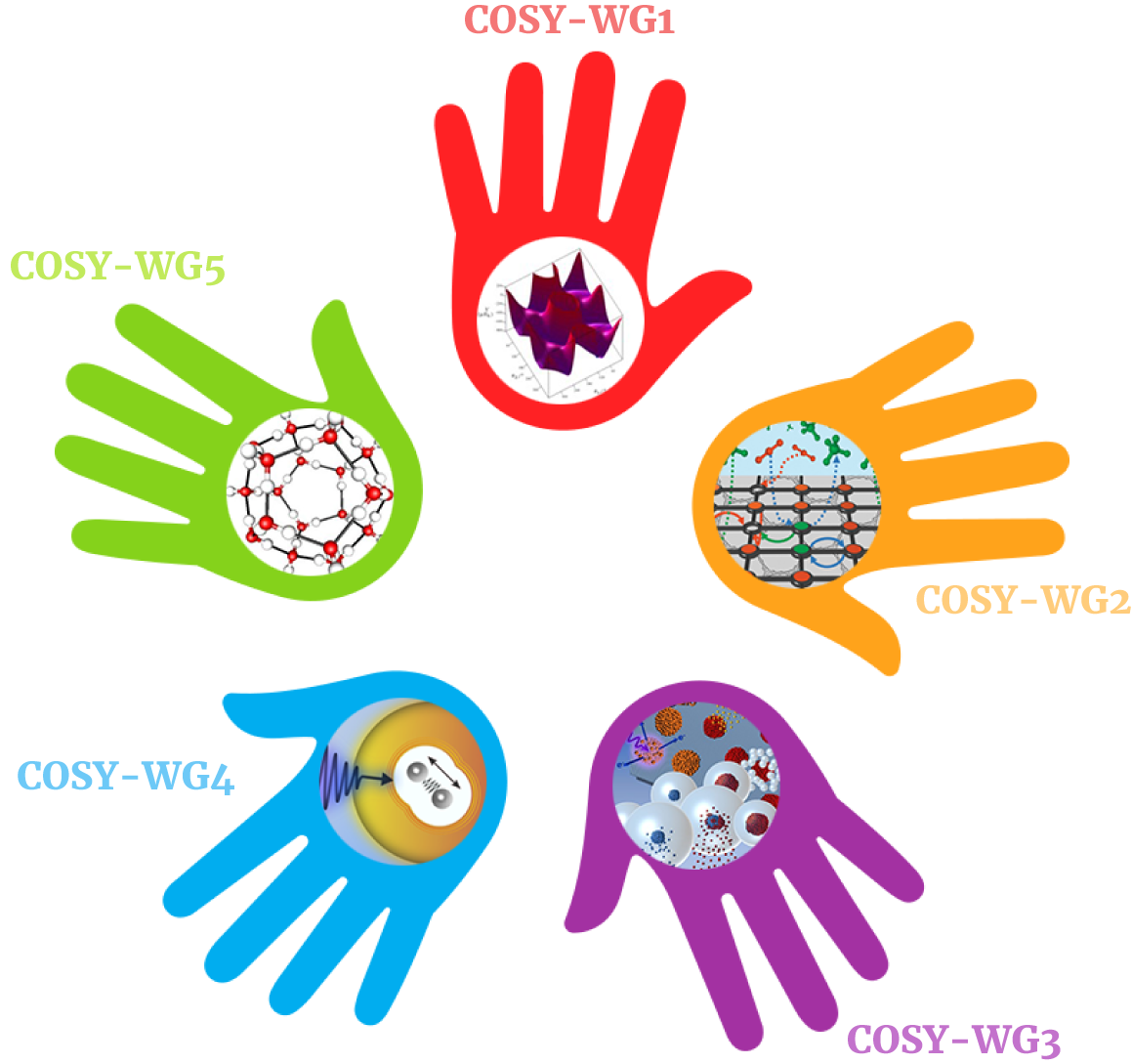
The meeting will serve as a vehicle to conect the five Working Groups (WGs) of COSY:

  • WG1 –  Intermolecular Interactions – Ab initio-Generated Force Fields and Machine Learning.
  • WG2 – Molecular Motion in Confined Systems.
  • WG3 – Confined Metal and Metal-Oxide Nanoparticles and Clusters Down to the Subnanometer Scale.
  • WG4 – Helium Nanodroplets in Science and Engineering.
  • WG5 – Confined Systems in Astrochemistry: Gas- and Condensed-Phase Spectroscopy and Reactivity.
Working Group 1

Consists on defining the application ranges of established electronic structure methods for confined molecular systems, on new developments in electronic structure theory to characterize them, and on Machine Learning (ML)-based representations of the involved intermolecular interactions and applications. The meeting will cover the presentation of:

1) Theoretical tools aiming to calculate interaction potentials between molecular systems and complex environments, and between themselves, through a combination of high-level ab initio theories, state-of-the-art (e.g., dispersion-corrected and dispersion-less) density functional theory methods, and semi-empirical approaches.

2) New developments in electronic structure theory and ML-based representations of intermolecular interactions and applications. The focus will be on open-shell symmetry-adapted perturbation theory and highly accurate composite schemes to be used for benchmarking purposes.

3) Systematic density-functional-theory simulations for selected confined molecular systems and enhanced by machine-learning-parametrized force fields and algorithms to screen the most relevant energy potential landscapes, also validating and refining the DFT predictions on the basis of high-level ab initio results.

Working Group 2

Deals with the testing and application of computational methods addressing confined molecular motion in large structures, including molecular cages, surfaces, and interfaces, combined with experimental characterizations. The meeting will cover the following topics related to the goals of the Action:

1) High-level ab initio calculations and grand-canonical Monte Carlo simulations for studying gas-surface and gas-gas interactions in microporous adsorbents. Testing and application of computational methods addressing confined molecular motion in large structures including molecular cages, surfaces, and interfaces, combined with experimental characterizations. The selection and design of improved materials for gas storage and adsorptive separation requires accurate determination of thermodynamic functions and reliable prediction of (co-)adsorption isotherms. The goal is not only the development of new materials and characterization of their adsorption properties but also benchmarking existing computational methods.

2) Molecular Dynamics of biomolecules in confined environments. New protocols to study the effect of the molecular crowding on the structure and dynamics of biological macromolecules (nucleic acids and proteins) and small binders found in the living cells by using quantum and classical approaches will be presented.  Assessing the effects of confinement on nucleic acids is of fundamental importance in many processes: from understanding the highly packed organization of the genetic material in the cell nucleus to gene delivery.

3) Quantum dynamics, spectroscopy, and reactivity of molecules interacting with electromagnetic fields. Apart from molecular structures, confinement may also be achieved by electromagnetic fields. An example are optical cavities, where molecules may become trapped, which gives rise to exciting possibilities of controlled probing of single molecules.  Interaction with electromagnetic fields often induces complicated coupled nuclear-electronic motion, the understanding of which requires the development of accurate and efficient methods for nonadiabatic dynamics.

Working Group 3

Is focused on small metal and metal oxide nanoparticles in the size regime below 10 nm, where quantum confinement influences the system functionality. It is the regime of catalysis, photonics, and bio-sensing and thus connects directly with the world of technology, especially SMEs. The meeting will cover:


1) Recent advances in synthesis and surface-deposition of metal and metal/oxide nanoparticles and clusters from several nanometer-size nanoparticles to intermediate (1-4 nanometers) and subnanometer scale all the way to single metal atoms. Research on suitable combinations of materials, optimal size, structure and composition of nanoparticles and clusters for specific applications.


2) Experimental and theoretical characterization of the structural, physico-chemical, colloidal, magnetic, optoelectronic properties and (photo-)reactivity of novel nanomaterials linked to specific applications, such as (photo-) catalysis, sensing, imaging and bio-medicine. The objective is to establish correlations between the atomic architectures, confined electronic structures, and functional behaviour. The systems will be distinguished according to their environment: deposited on a substrate (including the influence of the cluster/support interaction) vs. in solution and including their interaction with (bio-)molecules.


3) High-level ab initio descriptions and experimental assessment. Theoretical descriptions in different confining environments (supported in materials, air, solution, and biologically relevant environments, with and without light) by combining high-level ab initio and embedding approaches will be discussed.


4) Identification of priority areas on which synergistic efforts of the participants to the WG3 of the Action could be concentrated, based especially on the availability of effective techniques for the synthesis, the experimental characterization, and the theoretical modeling of the static and dynamic structure, as well as the opto-electronic and functional (e.g., catalytic) properties of the systems.

Working Group 4

Deals with helium nanodroplets as unique nano-cryo reactors for aggregating, cooling, and probing molecular complexes, metallic clusters and exotic nanoparticles. The structure and dynamics of both the embedded aggregates and of the quantum fluid helium nanodroplets are experimentally probed by IR, high-resolution and time-resolved laser spectroscopy, mass spectrometry, charged-particle imaging, single-particle x-ray diffraction imaging, and surface deposition. Helium nanodroplets impacting a surface allows the realization of `soft-landing deposition’, that is transferring embedded aggregates from the quantum liquid droplets onto substrates with minimal structure changes. Theoretical tools will combine quantum [(time-dependent) density functional theory], semiclassical and classical methods for the He atom motion. This first meeting will address specific systems produced by helium-droplet-mediated synthesis and surface deposition: (i) multi-component metal and metal-oxide clusters, nanoparticles, and single atoms; (ii) nano-aggregates probed in situ by x-ray coherent diffraction imaging; iii) organic (donor-acceptor) light-harvesting complexes; (iv) solvated, microhydrated molecules and organic complexes relevant for biology; (v) hydrocarbon clusters and molecules forming prebiotic species at star-dust conditions.

Working Group 5

Focuses in Astrochemistry in a broad sense. Observations both from the interstellar medium and laboratory experiments form the basis for the computational and theoretical chemistry and physics methods.

1) The experimental methods at our disposal play an important role, i.e., attractive kinetics and spectroscopy experiments in the laboratory, often mimicking at least partly the conditions in the interstellar medium. The spectroscopy part includes the state-of-the-art laser experiments with frequency combs and build-up cavities. Kinetics and dynamics experiments that use modern spectroscopy tools will be directed particularly to low temperature and barrierless reactions appropriate for interstellar medium.

2)  Fascinating quantum chemistry and classical physics computational tools have to cope with the gas systems of isolated molecules with high precision and the complexity of the surface and condensed phase systems. We are interested in using and developing these methods in investigating molecular properties and chemical reactions in the gas and condensed phase molecular problems in astrochemistry. Extreme conditions such as very large magnetic fields and high temperatures will also play a role in applying theory and computational approaches.

3) As all these issues are demanding but very interesting and scientifically stimulating, the other members in COSY are very welcome to share their scientific knowhow with the WG5 members.